
Cornerback Training
- Cornerback Drills
- Advanced Cornerback Drills
- Cornerback Covering Tips
- Technique and Mechanics
- Cornerback Training Goals
- Cornerback Training Program
Speed & Agility
Training
- Increasing Speed through Strength
- Flexibility for More Speed
- Sprint Technique & Mechanics
- Speed Training Drills
- Speed Training Workouts
- DB Footwork & Agility Drills
Football Skills
Cornerback Weight Training
Cornerback IQ
- Defensive Back Coverages
- Reading Offenses
- Reading Quarterbacks
- Reading Receivers
- Disguising Your Coverages
Diet & Supplements
Blog
Great Cornerbacks
Study these guys...
- Deion Sanders
- Charles Woodson
- Darrell Revis
- Champ Bailey
- Darryl Green
- Nnamdi Asomugha
- Asante Samuel
- Al Harris
Video Library
Cornerback Drills
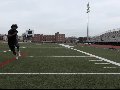 Box Drill
 Hitch-n-Go
Agility Drills
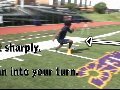 L-drill
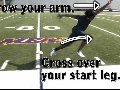 Short Shuttle
Lightbox With Video by VideoLightBox.com v1.11m
Short Shuttle
Lightbox With Video by VideoLightBox.com v1.11m
More Coming Soon....


Great Cornerback Diet
When it comes to managing your diet there are certain things you can do to maximize your nutrition while still eating foods that you like.
These things include monitoring what you eat, scheduling a meal plan, and recording your calories and macronutrients.
It might sound complicated, but doing these things are actually easy, and reveal exactly what your diet looks like, good or bad, and how you can improve it.
Now I'm not a nutritionist, but you don't need to be nutritionist to know that what you eat can effect your training, recovery, performance, and overall well-being.
Monitoring Your Nutrition
The whole point of recording your daily nutrition is so you can monitor it over time, using the information to reach your short- and long-term goals.
It takes nearly all of the guesswork out of what you should or shouldn't be eating.
Eliminate the Guesswork
There are other powerful tools out there that will definitely take the guesswork out of making your diet work for you.
Food Scales
Food scales let you measure foods that can't be divided into serving sizes or are hard to measured with cups, like meat and certain kinds of vegetables.
Using a food scale may even give you a better measurement than the nutrition facts labels can.
Calorie Management
There are some great tools you can use to log and track your calories. Self.com has a Nutrition Data page, which has a built-in catalog of different foods, which you can log your meals.
If you create a free account, you can use the page to input the foods you eat, and track your diet.
Get Better Results With The BodyBugg
The best calorie-management device I've seen (and used) is the BodyBugg. Made by Body Media, this sick device is worn on your upper arm and actually records how many calories you're burning throughout the day.
My Experience With the BodyBugg
While in my muscle-building phase, I noticed that I was getting stronger and more cut, but I wasn't actually putting on any muscle. And it was my muscle-building phase, so the whole point was to put on muscle.
I wasn't happy.
I tried to eat more but it wasn't enough. So I decided to try out the BodyBugg so that I could actually SEE and MEASURE what I was eating and pack on muscle.
The first couple of days I wore it, I could see that I was burning about 4500-5000 calories per day (on training days), but I was only eating about 3700 calories.
Well, that huge 1000-calorie deficit was why I wasn't able to put on muscle! And intense training with a huge negative calorie balance was leading me down the road to injury.
So I revised my meal plan make up the calories and POW... The muscles grew.
I'm not trying to show off, but here are my results...


Knowlege is Muscle
Knowing how many calories you're burning helps because then you know how many you need to consume. Instead of waiting weeks for your body to show you the results of your diet, you can see instantaneously know where you're at and how much you need to eat.
The BodyBugg comes with online calorie management software that is way better than writing stuff down on your own. They already have many foods cataloged for calorie count and goal-setting software that allows you track your progress, very similar to Self.com's Nutrition Data page.
You can get your daily calories-burned by either plugging the device into your computer (via USB) and using the online software (which requires a subscription) or pay a bit extra for a watch-like display device that gives you up-to-the-minute information on your calories burned among other things.
You can also pay a bit more for the smartphone version, which can display all your info via the BodyBugg smartphone app, which also has the built in food database for easy meal logging.
(Endorsed by GreatCornerback.com)
Be a Shutdown
Corner in 18 Weeks!

The Shutdown Cornerback
Training Program
Shave 3-5 Tenths
Off your 40!

The Speed Encyclopedia
Cornerback Critique
Put Your Skills On display!
Get Rated and Reviewed!
Recruiting
© 2011-2013 GreatCornerback.com All Rights Reserved.
Powered by Site Build It!
New! Comments
Have your say about what you just read! Leave me a comment in the box below.